The Myth That Every Instrument Has One Job
The idea that every instrument has one job misses how arrangement changes its role. Learn to hear a guitar, bass or drum kit shift with the music.
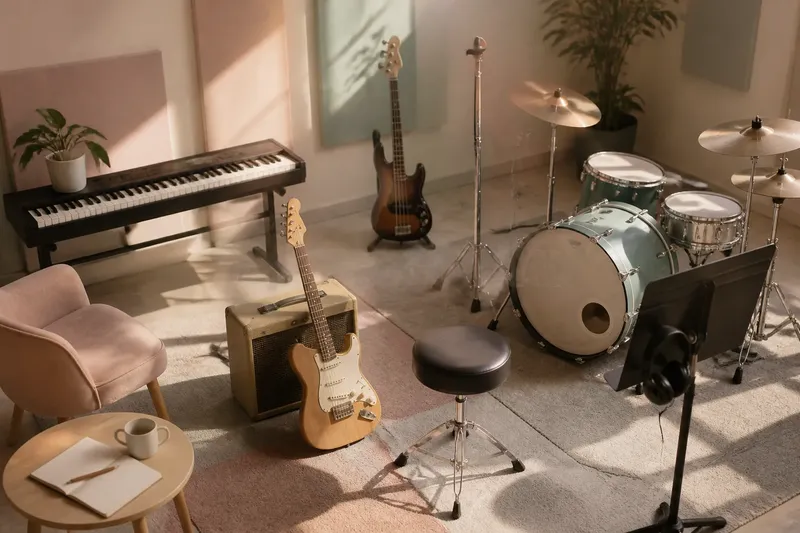
The most common mistake in hearing an arrangement is to assign each instrument a permanent job: bass keeps time, guitar supplies chords, drums mark the beat. That shorthand can make a busy song easier to follow, but it also hides the choices that give the music shape. An instrument’s role depends on what it plays, when it plays and what the other parts are doing.
Think of a guitar. It might strum a chord, pick out a tune, add a brief answering phrase or make a single rough sound that changes the mood of a section. The instrument stays the same; the musical work changes. Hearing those shifts is a useful way to understand arrangement without needing a score or specialist vocabulary.
What does an instrument’s role actually mean?
A role is the function a part serves in a particular passage. It is not a fixed property of the instrument. The same piano can provide harmony, carry a melody, reinforce a pulse or leave space for a singer, sometimes within one song.
It helps to separate the instrument from the part. “Drums” names a family of instruments; “a steady pulse on the closed hi-hat” describes something a drummer might do. A role can be described broadly—such as supporting the harmony—or more precisely, as a repeated pattern that marks the offbeat.
Roles are also relational. A low note may sound like the foundation when the rest of the arrangement is bright and high, but a bass instrument can take the foreground if it plays a distinctive line and the others fall back. No instrument claims the lead simply by being loud, low or familiar.
Why do familiar labels stick?
Labels are useful because many musical settings do rely on common conventions. In a rock band, a drum kit often helps establish the pulse, while bass and guitar frequently share the work of grounding the harmony. In a string quartet, different instruments may take turns carrying the tune while the others support it.
Those conventions help musicians communicate quickly, and they give listeners an easy first map. The trouble starts when a usual pattern is mistaken for a rule. A guitar can keep time with clipped chords, but a piano can do that too; a drum kit can make a melodic-sounding pattern, while a singer may provide the most regular pulse through repeated phrasing.
Instrument design shapes what is convenient, not what is compulsory. A flute can sustain a clear line, and a hand drum can produce sharply differentiated sounds, but neither fact dictates a single role. Players, composers and arrangers work with the instrument’s character while deciding what the music needs at that moment.
How can one part change jobs in a song?
Listen for changes in activity, register and timing. A part may move from repeating a short figure to tracing the singer’s melody, or from filling every gap to holding a note through a transition. A change can be obvious, but it can also happen through a small shift in emphasis.
Imagine a small band arranging a verse and chorus around a guitar, bass and drum kit. In the verse, the guitar might play soft, widely spaced chords while the bass outlines the harmony and the drums keep a restrained pulse. For the chorus, the guitarist could switch to a brighter repeated figure, the bass could answer the vocal between phrases and the drummer could add accents. The same three instruments now serve different functions: the guitar adds motion, the bass creates a countermelody and the drums help mark the section’s lift.
The parts need not change instruments or become more complicated. A keyboardist could turn a sustained chord into a sequence of short notes, changing the feel from spacious to restless. A drummer could drop the cymbal pattern and leave only a low drum pulse, making the band sound more exposed even though the beat continues.
Silence is part of the change, too. When an instrument stops playing, the remaining parts may take on functions that were previously shared. If a guitar drops out, a keyboard might become the main source of harmony; if the drums pause, repeated notes from another instrument can make the pulse easier to notice.
What should you listen for in a changing arrangement?
Try following one instrument at a time rather than trying to hear the whole mix at once. A familiar recording works well: listen to a verse, then a chorus, and ask what the chosen instrument contributes in each. The point is not to identify every note, but to notice whether its function changes.
- Does it lead? Notice which part carries the tune or attracts attention between vocal lines.
- Does it support harmony? Listen for chords, sustained notes or a repeated pattern that gives the melody a backdrop.
- Does it mark time? Check whether the part makes the pulse clear, adds accents or plays against the beat.
- Does it answer another part? A short phrase after a vocal line may work like a musical reply.
- Does it create texture? A drone, scrape, tremolo or soft sustained tone can colour a passage without carrying its tune.
- Does its role change at a boundary? Listen around a verse, chorus, bridge or pause for an entrance, exit or change of pattern.
These questions are listening prompts, not boxes every part must fit into. A single line may support the harmony and mark the pulse at once. In a densely arranged passage, several instruments may share one function; in a sparse one, a single instrument may shift between several.
How do tone and context affect the role?
Musical function is not the same as tone colour. Tone colour, often called timbre, describes the quality that distinguishes one sound from another. Function describes what that sound is doing in the passage. A bright mandolin and a soft electric piano can both play a repeating chord pattern, though they give it different characters.
Register—the part of the sound range being used—can alter how a role comes across. A low guitar figure may blend with the bass and reinforce the foundation; the same instrument playing high, clipped notes may sound more like a rhythmic hook. Volume, articulation and space between notes also matter: a held chord can cushion a vocal, while short, sharply attacked chords can make the same harmony feel more insistent.
Genre and ensemble size influence expectations, but they do not settle the matter. In a jazz combo, a piano may alternate between chordal support and a solo line. In a folk group, a fiddle can carry the tune, add a harmony line or make rhythmic pulses with short, repeated notes. The listening question is always what this part contributes here, rather than what an instrument is supposed to do in general.
Which questions help identify an instrument’s role?
Can one instrument carry both rhythm and melody?
Yes. A guitarist might pick a tune while accented notes keep a pulse underneath, or a pianist might shape a melody with a steady left-hand pattern. The roles can overlap, especially when an arrangement has few players.
Is the loudest instrument always the lead?
No. Loudness can draw attention, but a quiet part may guide the harmony or supply the hook that makes a passage recognisable. Notice which line shapes the musical direction, not only which sound stands out in the mix.
Can an instrument change roles without changing notes?
It can, because context changes what a part seems to do. A sustained note may sound like a background colour beneath a vocal, then become the focus when the other instruments fall silent.
How can I hear a role change in a recording?
Choose one part and compare what it does before and after a clear transition, such as a chorus entrance or a pause. Listen for changes in register, rhythm, emphasis, or whether the part moves closer to the foreground.
Why does this change the way a song feels?
When an instrument changes function, the arrangement can develop without introducing a new sound. A repeated part may become more urgent because its notes tighten; a melody may feel more exposed when its accompaniment thins. The listener hears a shift in attention and energy, even if the instrumental line remains familiar.
This is also why the same instrument can carry different emotional weight from one passage to another. A quiet drum pattern might steady a fragile verse, then turn into a forceful accent pattern in the chorus. The drum kit has not acquired a new identity; the arrangement has asked it to contribute differently.
The next time a song feels as if it has opened up or changed direction, follow one instrument rather than reaching for a genre label. You may hear the guitar stop supplying chords and begin answering the singer, or a keyboard move from background texture to the source of the hook. That small shift is often the arrangement’s clearest clue to how the music is moving.